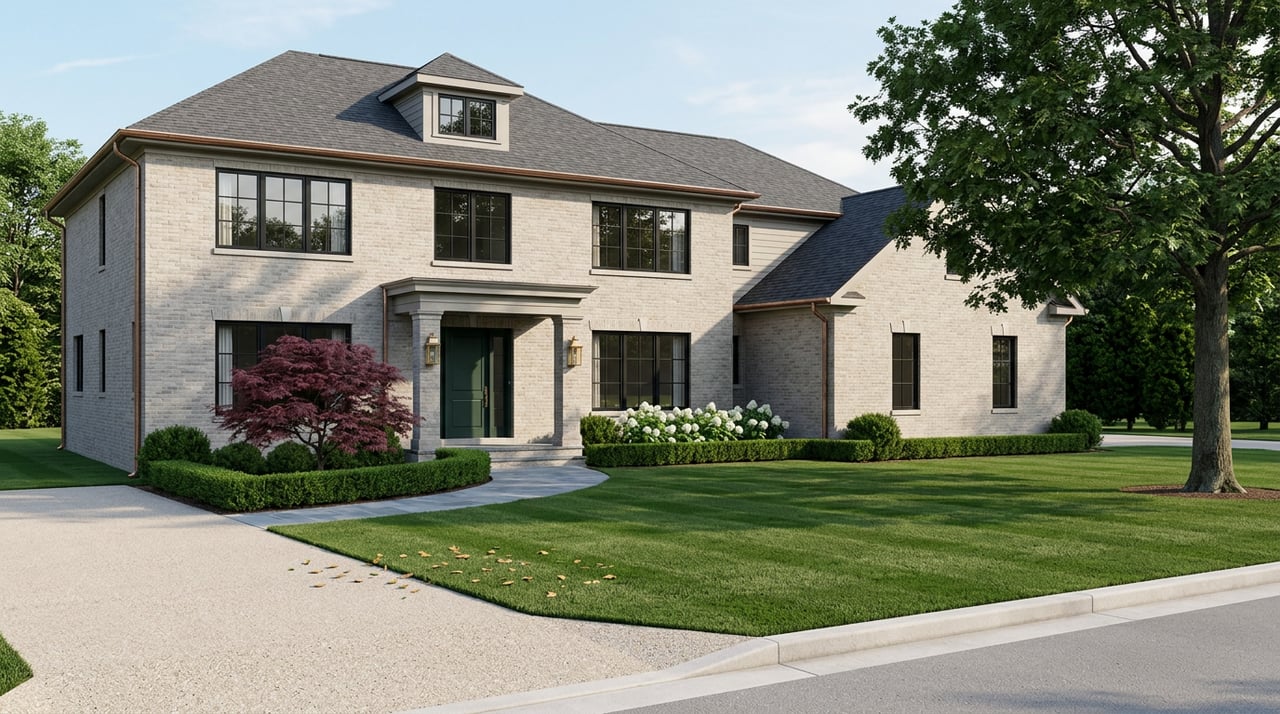
The Tax Line on Your Raleigh Listing Has an Expiration Date
September 24, 2026
September 24, 2026
Look at any Wake County listing sheet right now and you'll find a property tax figure sitting next to the HOA dues and the square footage, presented as if it's a fixed cost like the roof or the lot size. It isn't. That number reflects the county's 2024 assessed value, and Wake County has already voted to replace every assessed value in the county on January 1, 2027. If you close on a home in the next several months, your first full tax bill as an owner may not resemble the one on the listing at all, and the last time this happened, the size of the change depended far more on which neighborhood you bought into than on how much you paid.
That's the piece worth understanding before you write an offer, not after.
Wake County's revaluation isn't a rate hike. It's a countywide re-appraisal of what every parcel is worth, done by law and periodically reset regardless of what a homeowner's tax bill looked like the year before. For years the county ran this process on an eight-year cycle, then shortened it to four years back in 2016 as growth accelerated. The most recent revaluation took effect January 1, 2024. In March 2025, the Wake County Board of Commissioners voted to compress the schedule again: the next revaluation lands January 1, 2027, one more lands January 1, 2029, and after that the county moves to a permanent two-year cycle.
The county's own explanation is about smoothing, not padding revenue. Wake County Tax Administrator Marcus Kinrade has pointed to the county's growth rate, noting that Wake adds new residents every day, which keeps pressure on housing supply and pushes assessed values up faster than most counties see. Board Chair Susan Evans framed the shift in similar terms after the vote, saying the goal was to make the process more predictable and fairer going forward.
"Moving to a shorter cycle will help smooth out these increases over time."
That's the stated intent. The 2024 cycle is the only real evidence of how it plays out on the ground, and it's worth sitting with before assuming 2027 will feel gentler.
The 2024 revaluation produced a countywide average increase in the low 50s, a figure Kinrade and the county have cited directly. Separate local reporting on residential-only figures put the number closer to 53%. Both describe the same event. Neither describes what happened inside any single neighborhood.
The variation is the part a listing sheet won't show you.
| Area | Reported 2024 increase | What drove it |
|---|---|---|
| Wendell | 63% (highest in the county) | Fast growth on the eastern edge of Wake County |
| Cary | Roughly 56% residential | Sustained demand in an already tight submarket |
| Countywide average | 51% (county figure) to 53% (residential reporting) | Growth pressure across the board |
| Oakwood, Boylan Heights, Southeast Raleigh | Bills described as nearly doubling for long-time owners | Older, lower assessed baselines catching up to current market value |
That last row is the one buyers tend to miss. A home with a modest 2024 tax bill inside the Beltline isn't necessarily cheaper to hold long term. It may simply be sitting on an assessed value that hasn't caught up to the market yet, and the next revaluation is the mechanism that closes that gap, often in one move. Two homes priced identically today, one in a fast-growing exurb and one in an established close-in neighborhood, can carry very different tax trajectories after January 2027, even though the sale price and the current bill look the same on paper.
After a revaluation, the county typically recalculates a revenue-neutral tax rate, a lower per-$100 rate designed so the county doesn't collect a windfall just because assessed values rose across the board. That's a real mechanism, and it matters. It is not the same as your bill staying flat.
If your home's assessed value rises by more than the county average, your bill still goes up, even under a revenue-neutral rate, because the rate is calculated for the county as a whole, not for your specific parcel. If your value rises by less than the average, your bill can actually fall. The county's own tax portal walks through the basic math: assessed value divided by 100, multiplied by the combined county and municipal rate. A $300,000 assessed value at a 65.70-cent rate works out to $1,971 in county tax alone, before any municipal add-on. Run that same formula against your own address once the new 2027 assessed value is public, and you'll have a real number instead of an assumption carried over from the seller's current bill.
When the 2024 notices went out, Wake County gave homeowners a defined runway to challenge their new value: informal reviews were accepted through March 1, and the formal window with the Board of Equalization and Review closed May 15. Miss both, and the assessed value stands until the next revaluation cycle.
The county hasn't published exact 2027 dates yet, and worth watching for them once notices go out, historically in mid-January of the revaluation year, through Wake County's revaluation page. What the 2024 cycle makes clear is that the appeal window is a matter of weeks, not months, and it applies to whoever owns the property when the notice arrives. If you close in late 2026, you inherit the new 2027 value and the right to contest it. If you close after the notices are mailed, you may be walking into a number that's already been set for two years.
Buying in Raleigh or greater Wake County over the next several months means buying ahead of a known, dated event rather than an abstract possibility. That's useful. It means you can ask a specific question that most listing sheets won't answer on their own: how did this particular neighborhood move in the 2024 cycle relative to the county average? A pocket that ran hot last time, the way Wendell or several close-in Raleigh neighborhoods did, is more likely to see another above-average correction in 2027 than a submarket that tracked closer to the countywide figure.
None of this changes what a home is worth to you today. It does change what you should budget for twelve to eighteen months out, and it's a very different conversation from asking a seller what they currently pay in taxes.
A few things worth doing before you write an offer on a Wake County home this fall:
For sellers, the current assessed value is often doing quiet work in a buyer's mental math, especially for move-up buyers comparing carrying costs across a short list of homes. That number is about to be replaced countywide. It's not a reason to rush a decision, but it is a reason to have an honest answer ready if a buyer's agent asks how your home's value moved in the last cycle, since Wake County's comparable sales tools make that history a matter of public record either way. We've written before about how Raleigh's due diligence fee has shifted from a bidding weapon to a commitment signal in this market, and the revaluation calendar is another example of a mechanism that rewards the seller who understands it over the one who's simply hoping the number stays put.
Does a higher assessed value in 2027 guarantee a higher tax bill? Not automatically. The county typically sets a revenue-neutral rate after a revaluation. Your bill moves based on how your value changed relative to the countywide average, not just whether it went up.
Can I appeal a value on a home I haven't closed on yet? Appeal rights belong to the owner of record when the notice is issued. If you're under contract before the notice goes out, this is worth discussing with your closing attorney as part of the timeline.
Is 2027 the last big jump, or does this keep happening? The 2027 cycle is a transition point. The county has already set the next revaluation for January 1, 2029, and every two years after that, so future changes should arrive in smaller, more frequent increments rather than a single large reset every four to eight years.
Where do I check my own address once new values are set? Wake County publishes assessed values and comparable sales tools directly on its real estate revaluation page as part of the notice process.
A tax line on a listing sheet is a snapshot, not a forecast. If you're weighing a purchase in Raleigh, Wake Forest, North Raleigh, or anywhere else in Wake County before the 2027 numbers land, it's worth a conversation about what your specific neighborhood's history suggests is coming, not just what the current bill happens to say today. Michelle Mundra and the team can walk through that history for any address you're considering, and help you build a realistic picture of carrying costs before you write an offer.

Looking to buy, sell, or invest in real estate? We're here to make your dreams a reality! Whether it's finding your perfect home, securing a lucrative investment property, or selling your current one, our dedicated team is ready to guide you every step of the way. Reach out to us today to start your journey towards your real estate goals!